Honda first attempted running in the 50cc World Championship in 1962 - the first year the class has been granted World Championship status. Honda decides to contest the class with a four-stroke, which would seem doomed to failure from the start as 50cc racing at the time was dominated by two-strokes. Honda's first 50cc contender was a single-cylinder known as the RC-110:
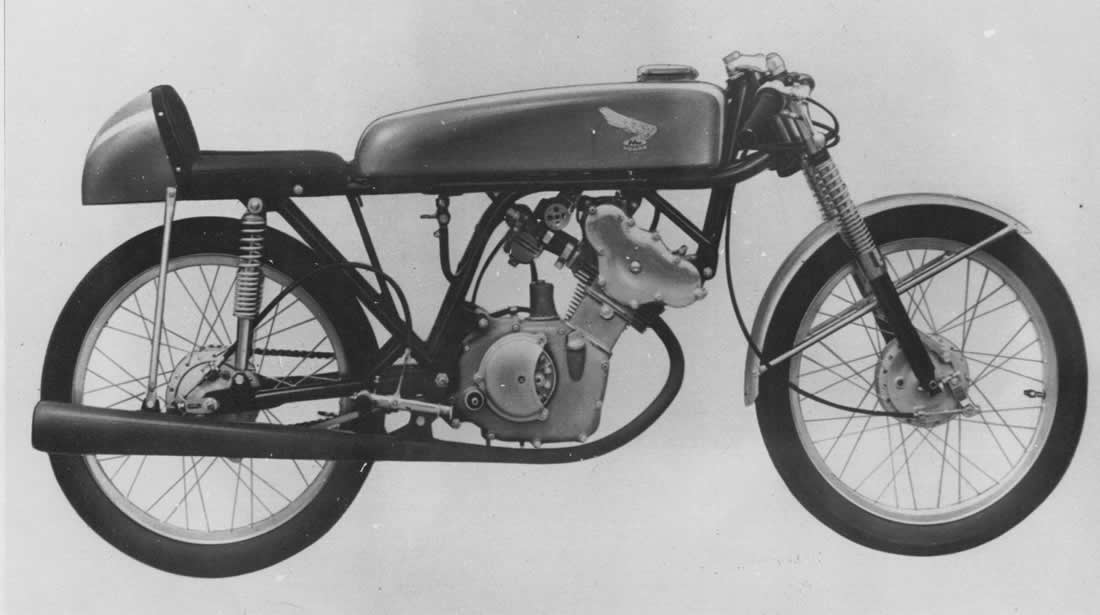
This bike had dual-overhead cams driven by gears on the right side of the engine. It had a bore and stroke of 40mm x 39mm and points for ignition. Compression is 10.5 to 1, and the engine produces 9.5 HP @ 14,000 RPM. It started the season with a five-speed gearbox, but later that was increased to six-speeds. The bore was also increased mid-season to 40.4mm, bringing the displacement to 49.9cc.
By the time the season rolls arround to the Isle of Man Honda has a new single - the RC-111:

It has new crankcases, a longer intake tract, and an eight-speed gearbox. By the time the series gets to Assen the bike has a ten-speed transmission, but the rider, Luigi Taveri, prefers the eight-speed and races with it, but in Finland he uses a nine-speed cluster.
For the last race of the season at Suzuka in Japan, Honda debuts a twin-cylinder 50cc bike - the RC-112:
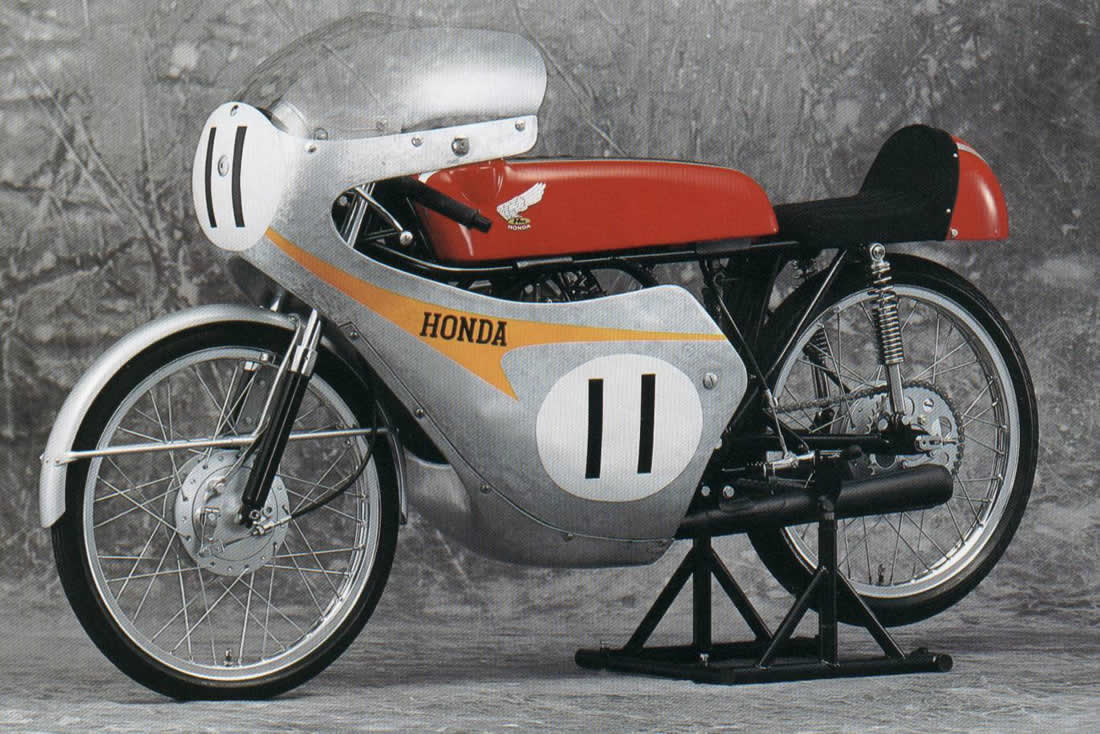
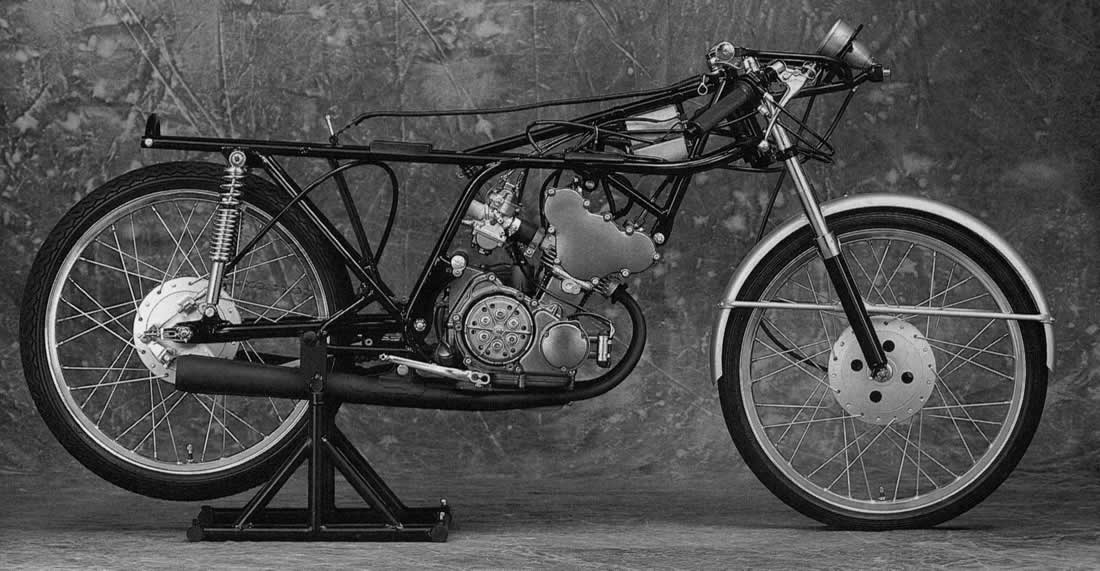
It has a bore/stroke of 33 x 29 and two valves per cylinder, with a magneto ignition still with points. It is a wet sump engine with a nine-speed gearbox. Power is 10 HP @ 17,500 RPM. It is only raced this once, but it wins with Tommy Robb in the saddle.
In 1963 Honda temporarily dropped out of the 50cc class, running only the Japanese GP with an all new bike - the RC-113:
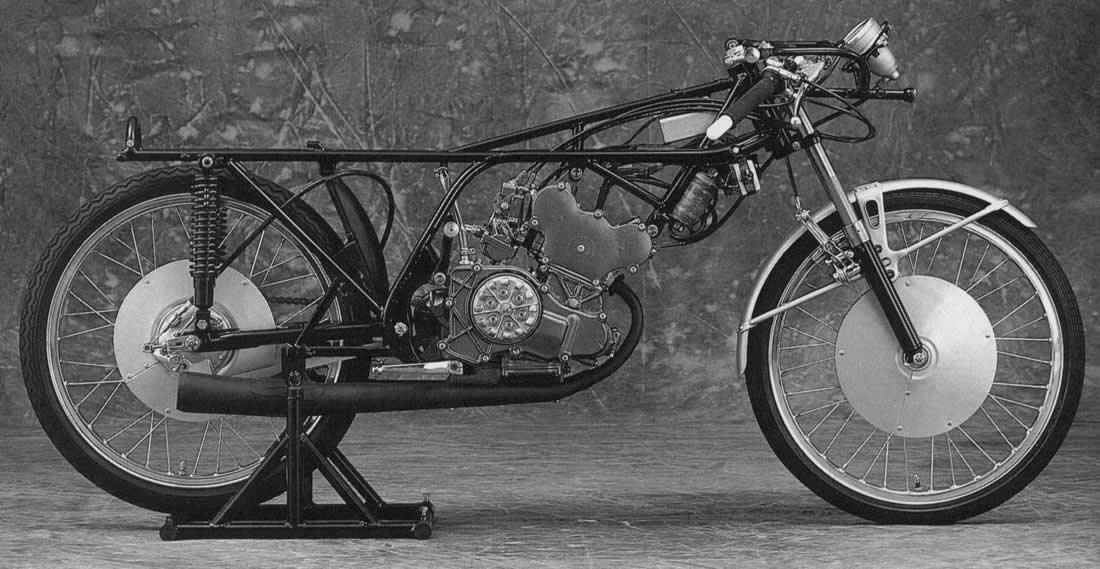
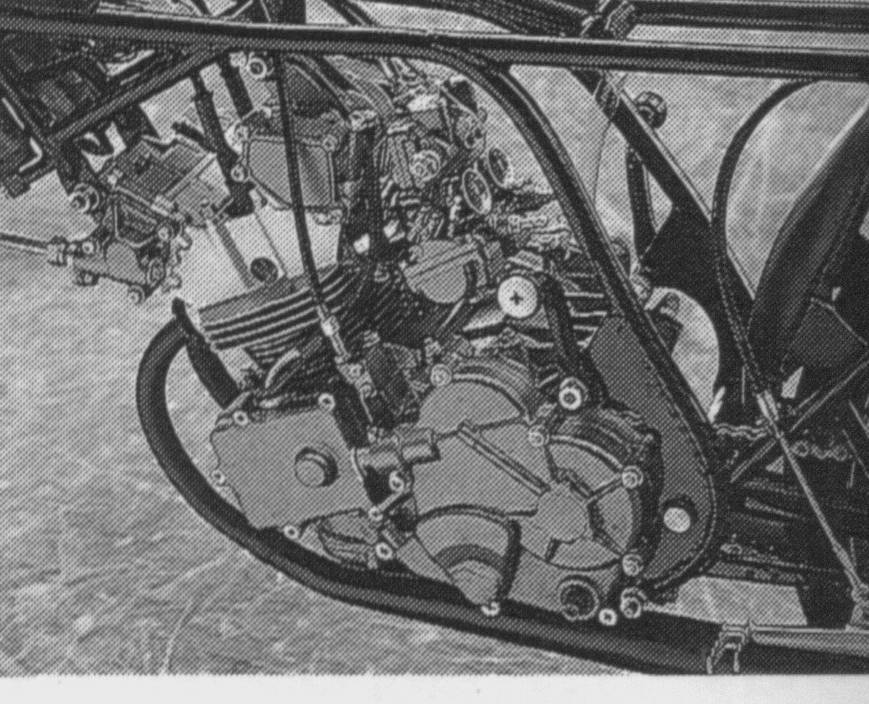
Bore & stroke is the same as the RC-112, but the engine finally gets a transistorized breakerless ignition. Still a wet-sump and nine-speed gear cluster, but now the engine revs to 19,000 RPM (with brief bursts to 20,000 allowed). Max power is 13 HP @ 18,500. This bike is the first of the 50's to use the bicycke-like caliper front brake clamping on the wheel rim. This is done to reduce weight and rotational inertia (so the bike steers quicker and lighter). The two sheet alloy discs are an attempt at streamlining at the front, but are not always used. The discs on the rear are used as heat-sinks for the rear drum brake. Later in the year this bike is replaced by the RC-114, which looks identical, but makes 14 HP @ 19,000 RPM, and is redlined at 20,500... yet can rev to 23,000!!! Top speed is over 110 MPH.
For 1965 Honda brings an all new bike - the RC-115:
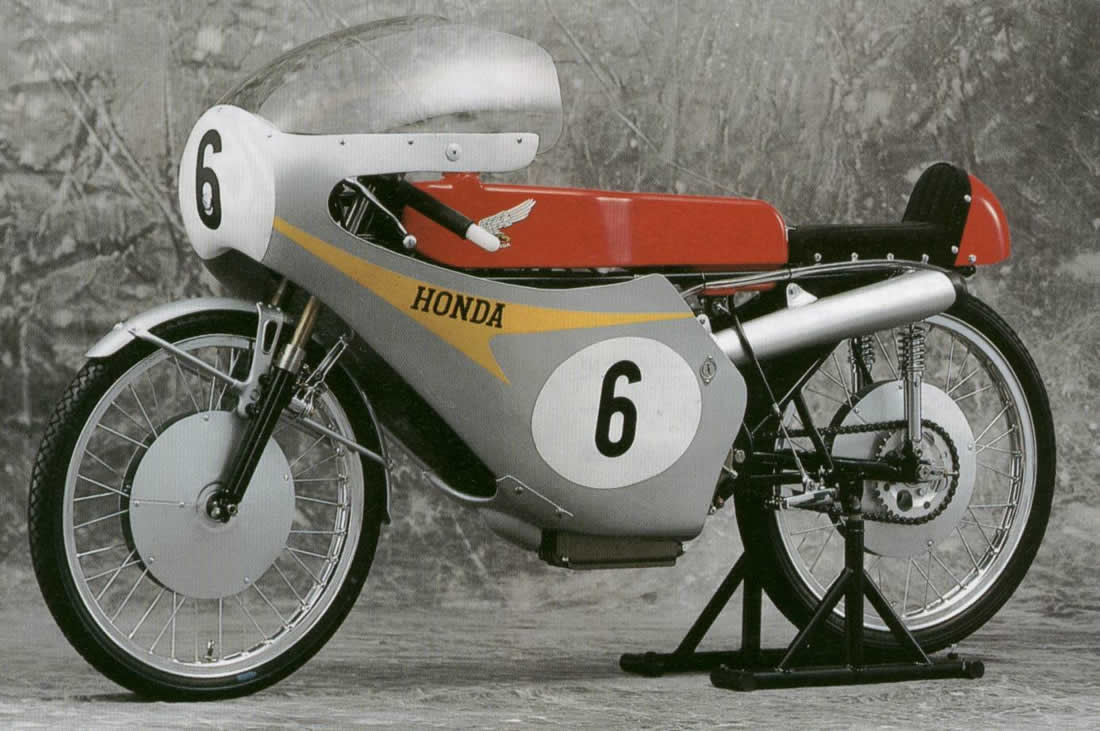
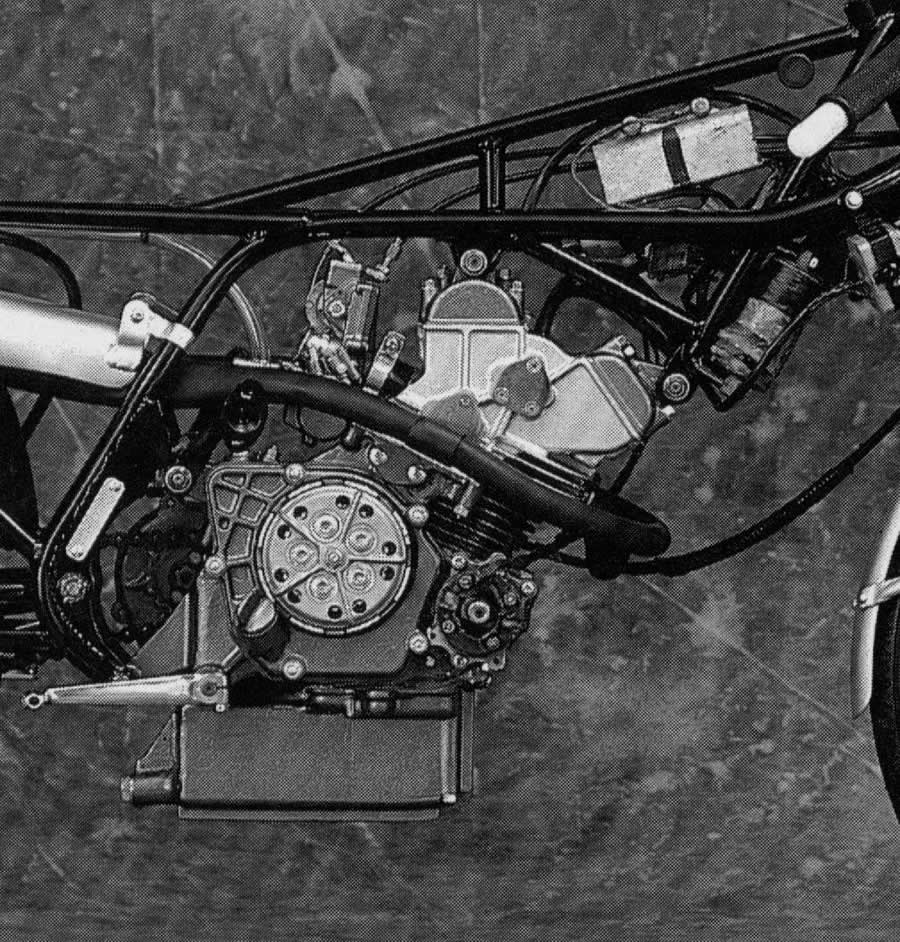
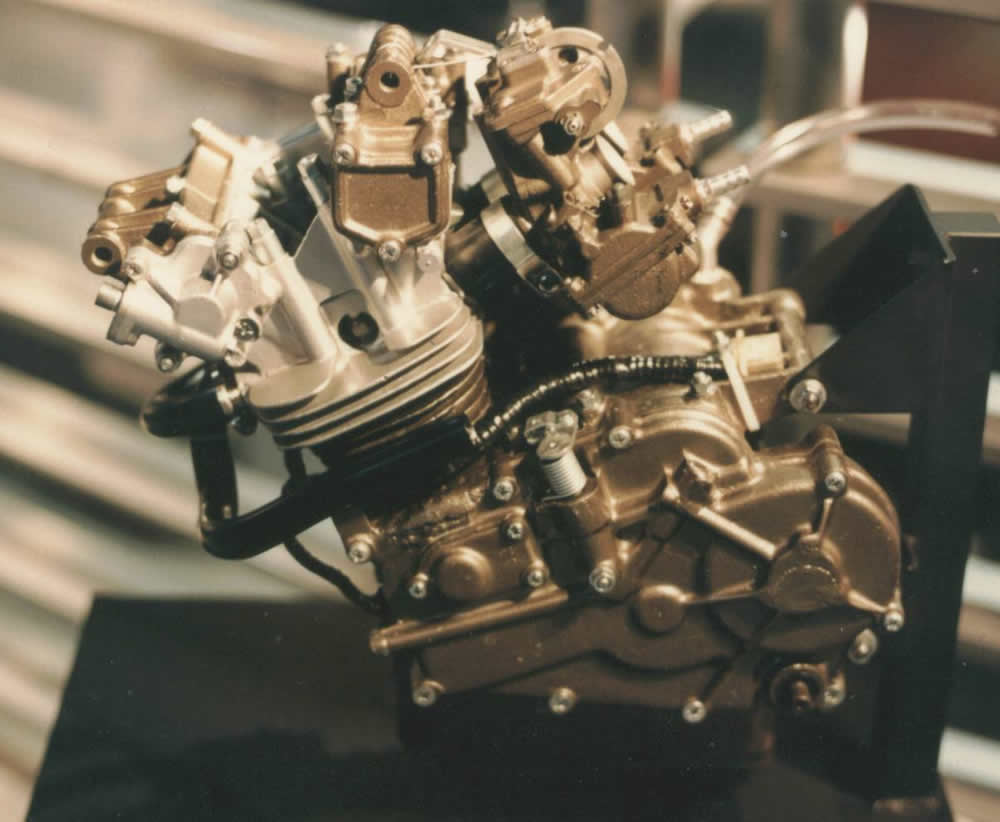
This is where Honda started to get really serious! Bore & stroke is now 34 x 27.4 mm, giving the twin a displacement of 49.75 cc. In an attempt to keep flywheel effect to a minimum the cams are still gear-driven, but now off the clutch driven gear instead of the crankshaft. Still a none-speed gearbox and a wet-sump, but valve angle is flattened out to 56 degrees, with the intakes inclined 24 degrees form the bore axis and the exhausts at 32 degrees (previous engines had a 72 degree valve angle, with both intake and exhaust at 36 degrees). Both high and low exhaust systems are used during the year, but Honda finally settles on the high pipes for less frontal area, as they can tighten up the lower part of the fairing. Teh header pipes are made of steel, but the megaphones are made of aluminum to reduce weight. The bike now weighs a feathery 50 Kg (112.5 lbs)!!! Compare that to the RC-110's weight of 61 Kg (137.25 lbs)...
This engine produces 15 HP @ 20,000 RPM, and is safe to rev to 24,000 if necessary!!!
For 1966 Honda reaches the pinnacle of their 50cc development with the RC-116:


For this bike Honda shortens the stroke again, with a bore/stroke of 35.5 x 25.14 mm. Power is 16 HP @ 21,500 RPM, and redline is 22,500, with the engine safe to 25,000 RPM for brief periods!
Now think about this for a moment... That is a power output of 320 HP per liter... Not even today's F-1 cars, or MotoGP bikes can attain such power output. In fact, no normally-aspirated four-stroke engine has *EVER* eclipsed this output per liter.
Granted, the comparison is not all together fair, but it does show Honda's incredible four-stroke technology of 40 years ago!
Some interesting dimensions for engine internals... Intake valve size is just a tiny 13 mm, and the exhaust valve is 11.5 mm. Stem sizes are 3.5 mm, and an exhaust valve weighs only 6 GRAMS!
Truly fascinating machines, and the like of which we will probably never see again...
If anyone is interested I can dope out some data on the equally incredible 125 cc five-cylinder, which even had a weird split throw crank...
Cheers!
Dallara


