Let's move up the displacement ladder to the next size category of the GP world championships and take a look at Honda's interesting 125's...
The story of the one-two-five race bikes starts way before the history of the little "tiddler" 50cc racers... All the way back in 1959!
Honda showed up at the Isle of Man TT races with bang in '59. They brought 5 riders (four Japanese and one American), five primary bikes with four spare bikes, and enough spares and equipment to outfit a complete race shop! The bikes were all 125cc RC-142's:
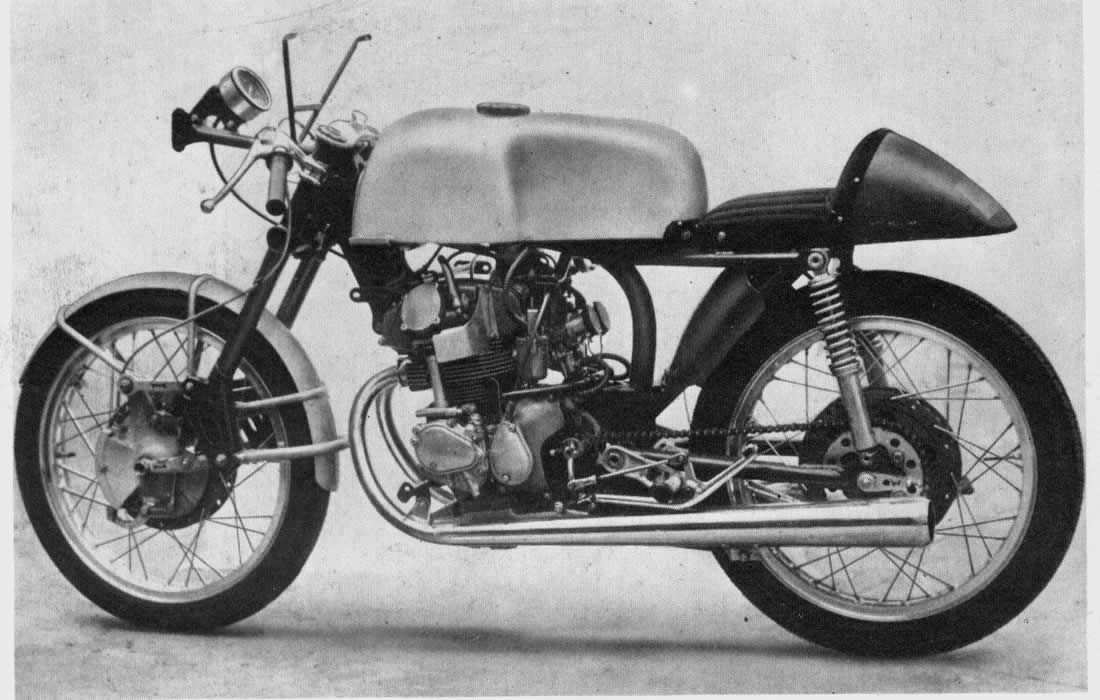
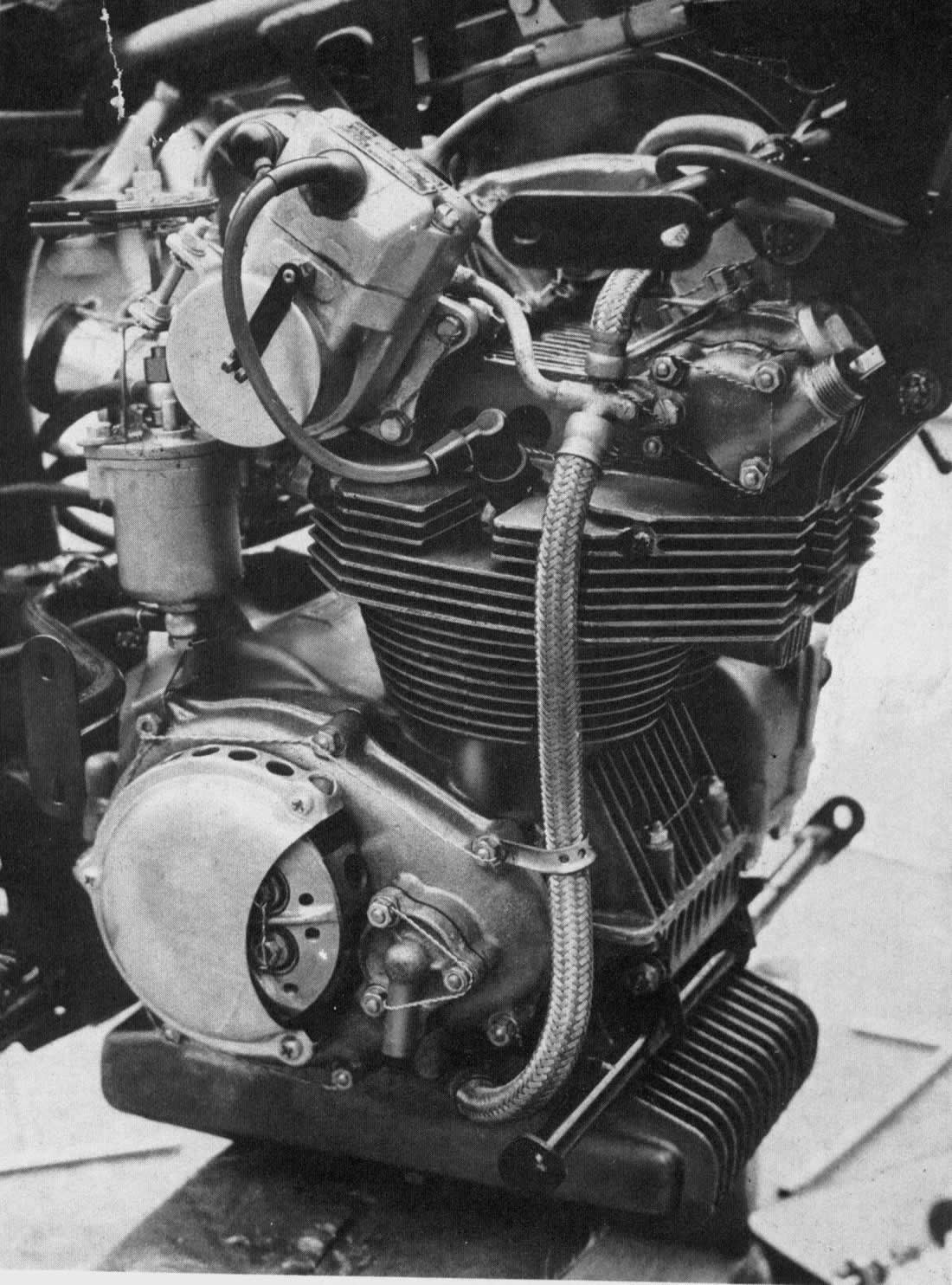
Engines were interesting... But not really that unconventional at the time. They were four-stroke twins with double-overhead cams actuating two valves per cylinder. The cams were driven by a bevel-gear shaft on the left side of the engine (this is an important point, mentioned in a moment).
It was clear immediately that the bikes were down on power, so four-valve heads were flown in from Japan. The engines displaced 124.6 cc's, with a bore & stroke of 44 x 41mm. Compression ratio was 10.5 to 1 (a number that keeps reappearing with Honda throughout their racing exploits...). It had a wet-sump and a 6-speed 'box. Power was 18.5 HP @ 13,000 RPM, with redline at 14,000. All the Jap riders finish, while the American (can anyone tell me who that was?
 ), and Honda wins the team prize in the class with finishes of 6th, 7th, 8th, and 11th.
This was to be a sign of things to come...
One note - Honda was very wrongly accused of "copying" the design of the NSU Rennmax 250 twins. Nothing could be further from the truth. Yes, both engines used a bevel-gear shaft to drive the cams, but the NSU's shaft drove the inlet camshaft with that driving the exhaust, whereas the Honda's shaft drove both cams. The Honda was a four-valve per cylinder engine - the NSU a two-valve. The NSU was dry-sump - the Honda a wet-sump. NSU used a battery-coil ignition - the Honda a magneto... And so on. The only true common things about the NSU and the Honda were they were four-stroke DOHC twins that used a bevel-gear shaft to drive the cams!
Anyway, moving on...
In 1960 Honda decides to do the entire GP championship instead of just one race, and they come with an all new 125 - the RC-143:
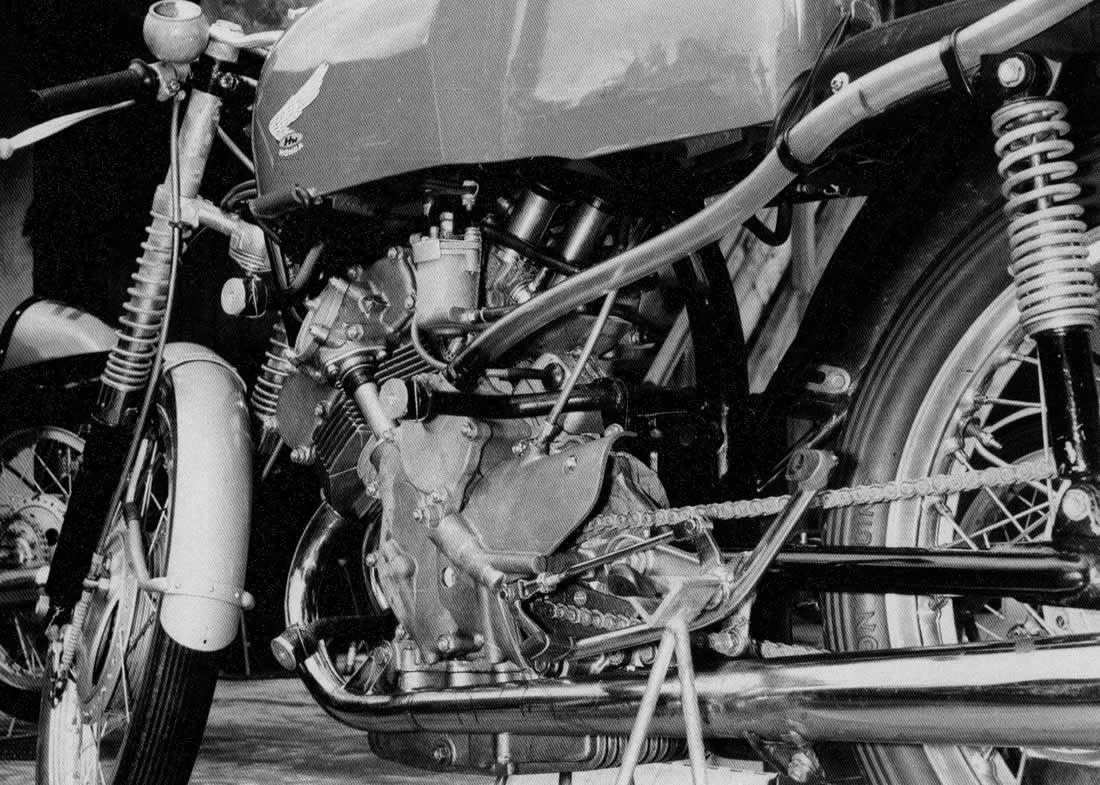
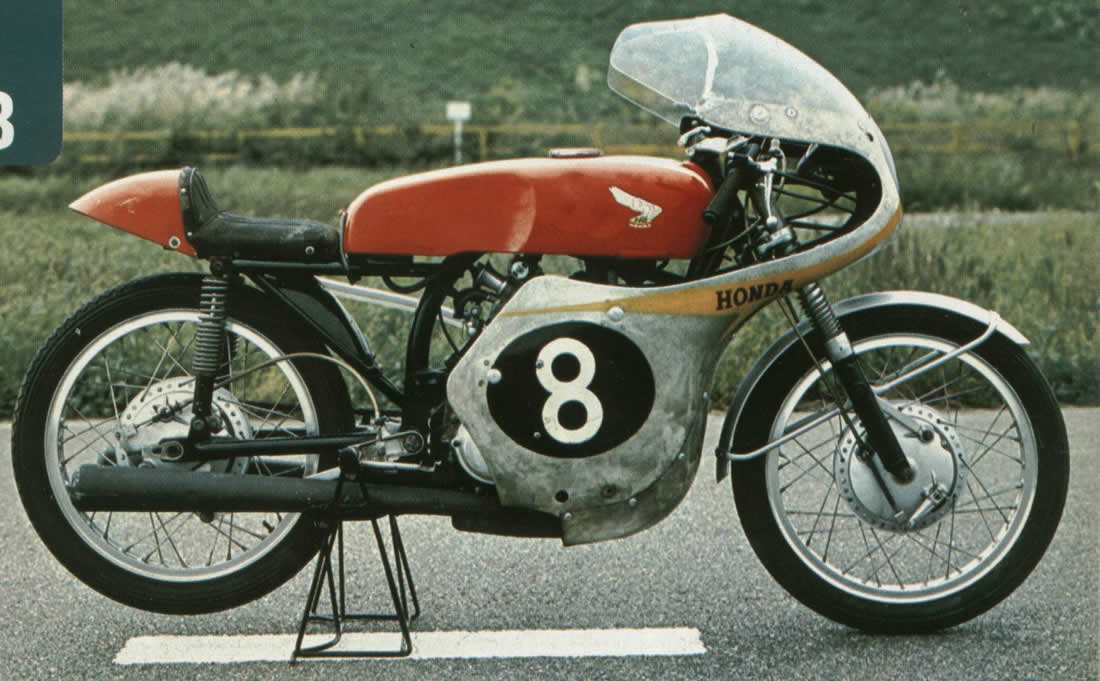
The engine design is much the same, but the magneto was moved from being driven off the intake camshaft to a spot behind the cylinders, driven off the base of the bevel-gear camshaft drive. Power is up to 23 HP @ 14,000 RPM, but the bikes were only marginally successful, getting beat by MV and MZ regularly. Best finishes were a pair of 4th's by Redman, one at Monza and the other at Assen. Honda ends up 3rd in the manufacturer's championship for the class.
Biggest chassis change from the previous year is changing from leading-link to telescopic forks.
1961 rolls around and Honda actually tried two bikes in the 125 class. One was the ill-fated RC-144:
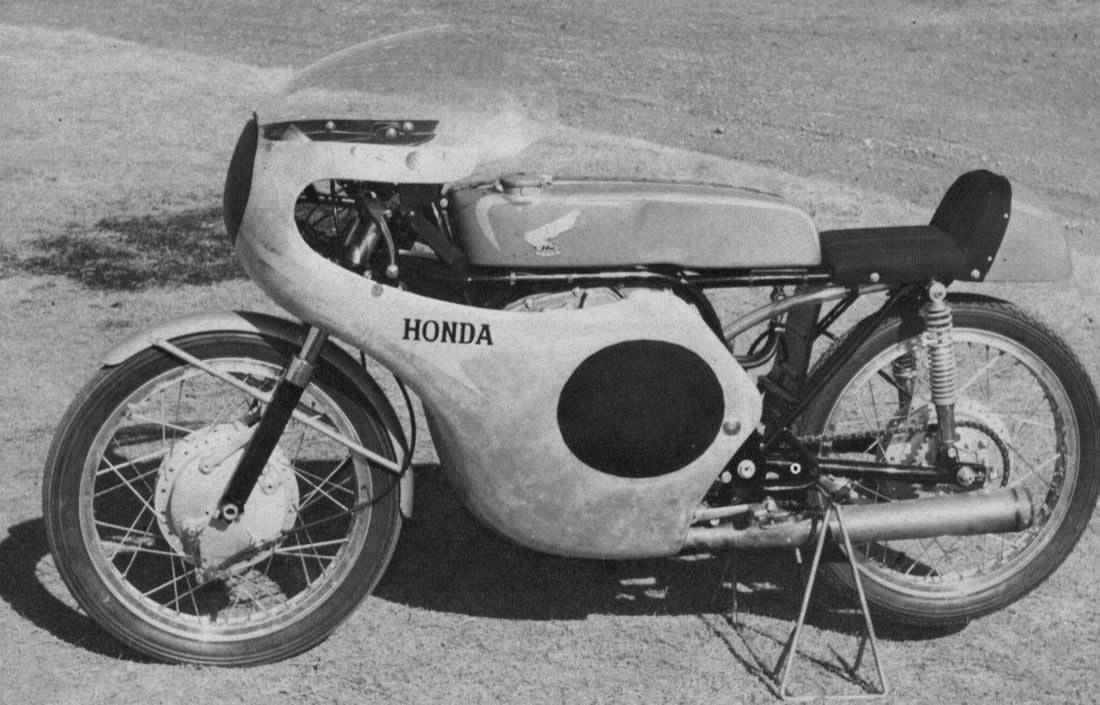
With this bike Honda tried a "long-stroke" engine, with a bore & stroke of 42 x 45mm... The bike's claimed power was 22 HP @ 13,000, but few believed that. The bike was only raced once - at the German GP - and then quietly spirited away, never to be seen in competition again.
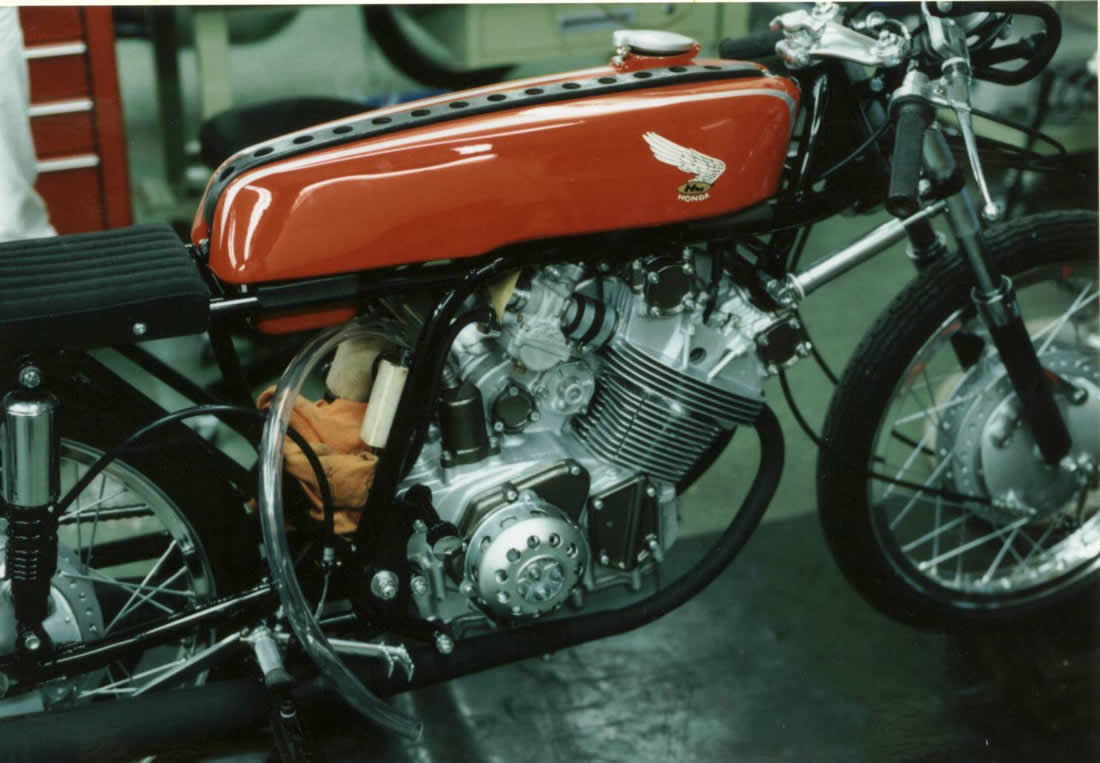
But that was okay, because Honda had an improved version of its previous year bike, and ofr 1961 this one was called the 2RC-143. Here's a couple of pics:
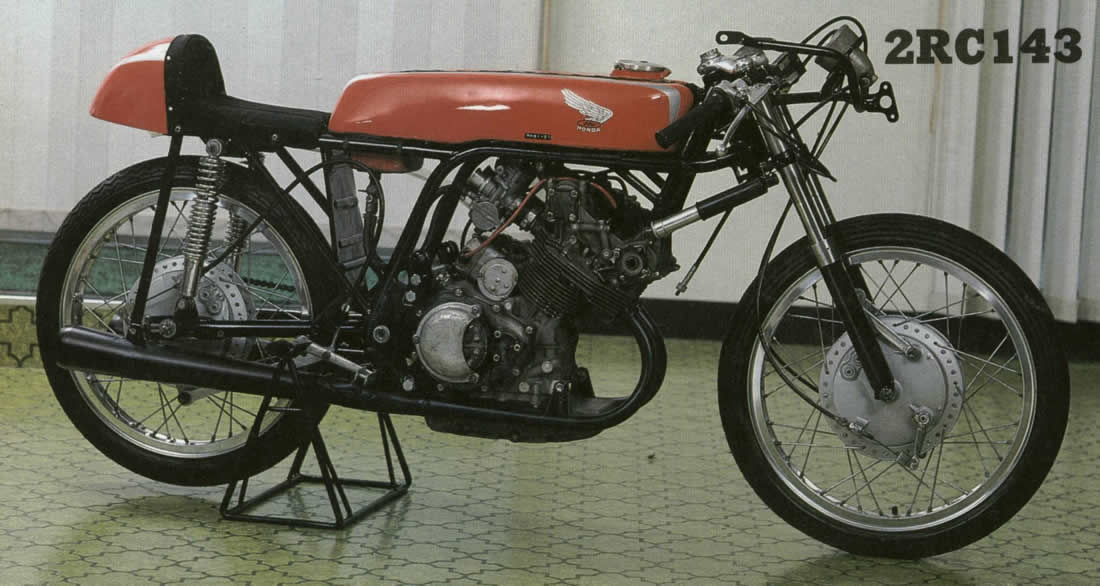
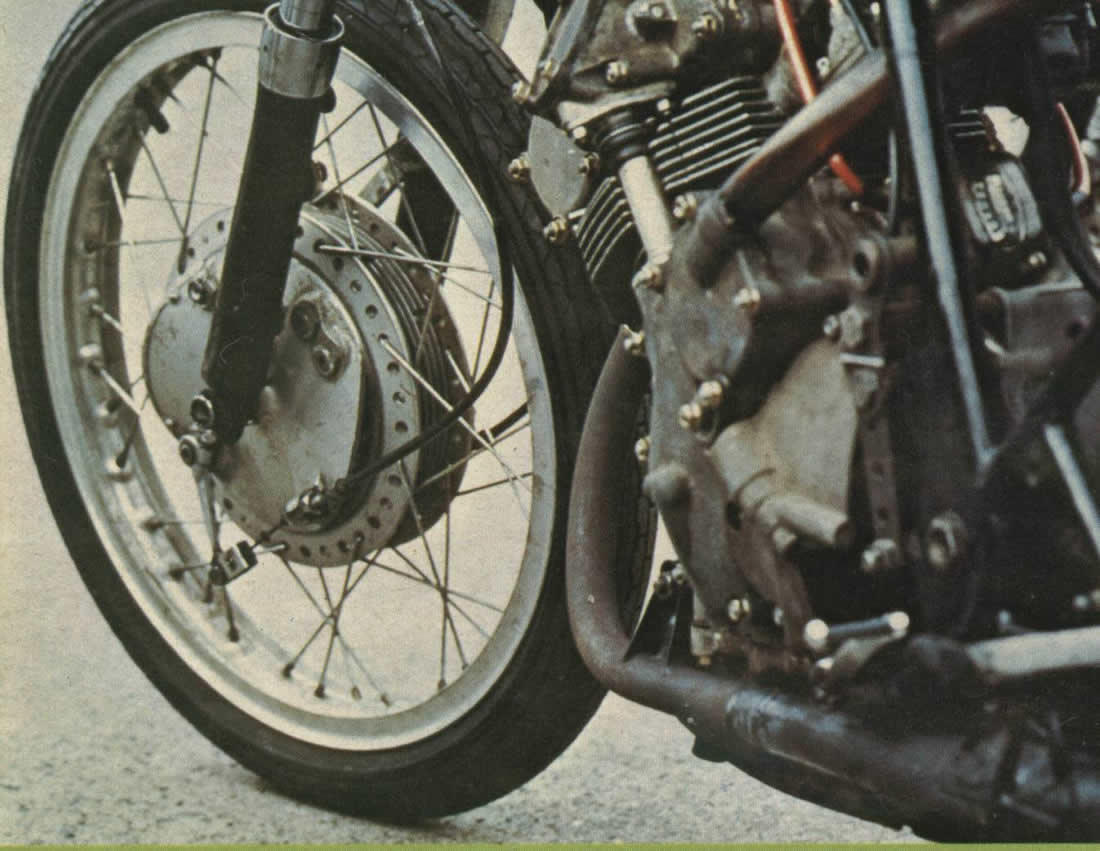
The engine is identical to 1960, but gone is the spine-type frame, replaced with an "open-loop" arrangement.
Honda has a good year in the class, winning 8 out of 11 races, but only by a real stroke of luck do they win the rider's championship with Tom Phillis. See, Honda had a bunch of riders in the class, but no team "orders", so though they won 8 races, it was almost never the same rider! Meanwhile, MZ's rider - Ernst Degner - keeps finishing up front and wins 3 of the races, so he has the points lead going into the final race at Argentina, but after the race in Sweden leading up to the finale, Degner decides to *DEFECT* from East Germany!!!
 Needless to say, MZ refused to provide him a bike for the final round. Degner tries to get another ride for Argentina on an EMC, but the bike arrives too late and the title goes to Phillis... An interesting sidenote is that Mike Hailwood won the Isle of Man round on the 125.
So that brings us to 1962, and the all-new 125cc RC-145:
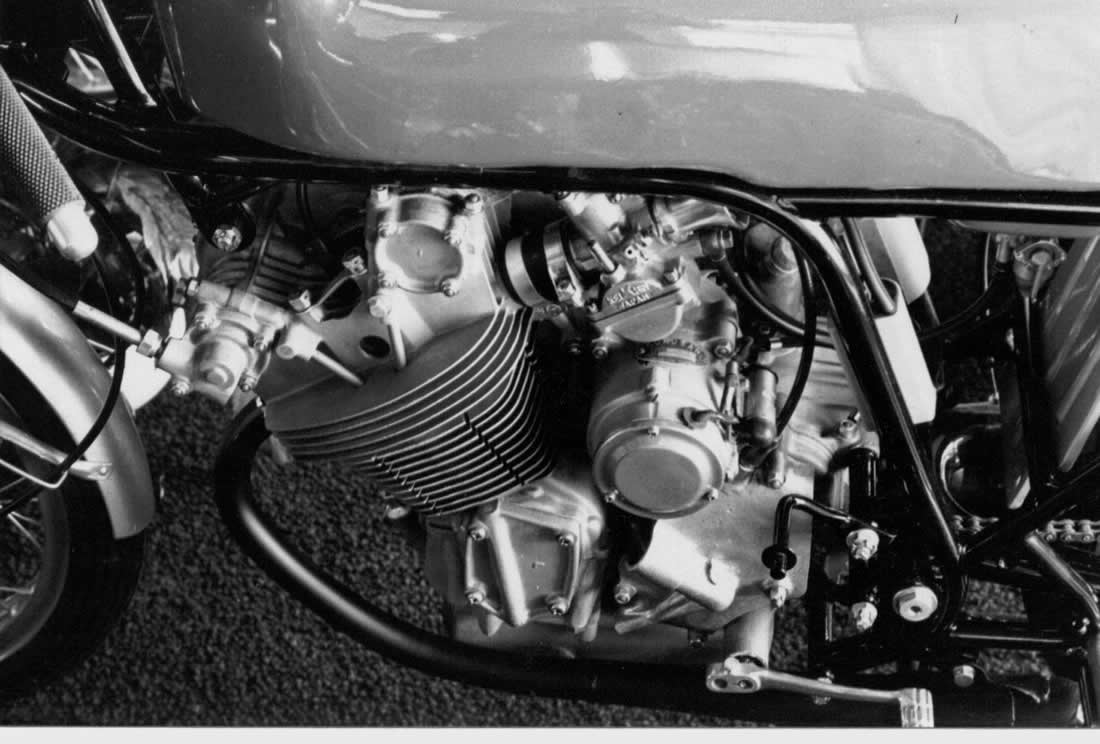
Though the bore & stroke are still the same at 44 x 41mm, this engine is completely different. It is essentially Honda's 250cc RC-162 engine with the two outside cylinder sawed off. The cams were gear-driven in the center of the engine, and power was up at 24 HP @ 14,000 RPM. this engine was a dry-sump, too - just like the RC-162.
Honda also decided to start selling "production" racers for privateers in 1962. In the 125 class this was the much loved CR-93:
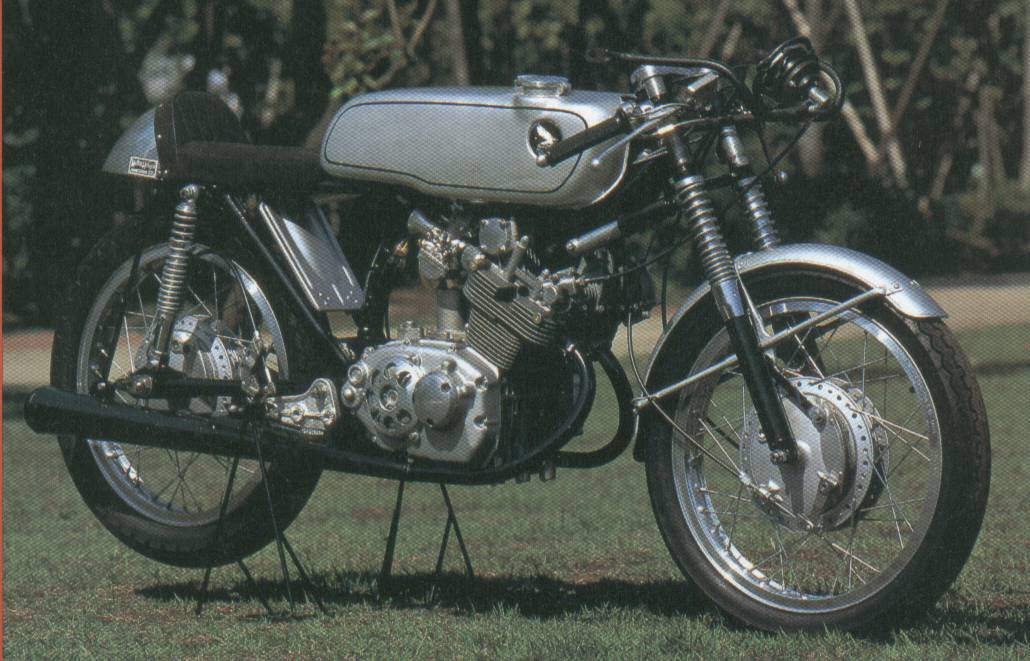
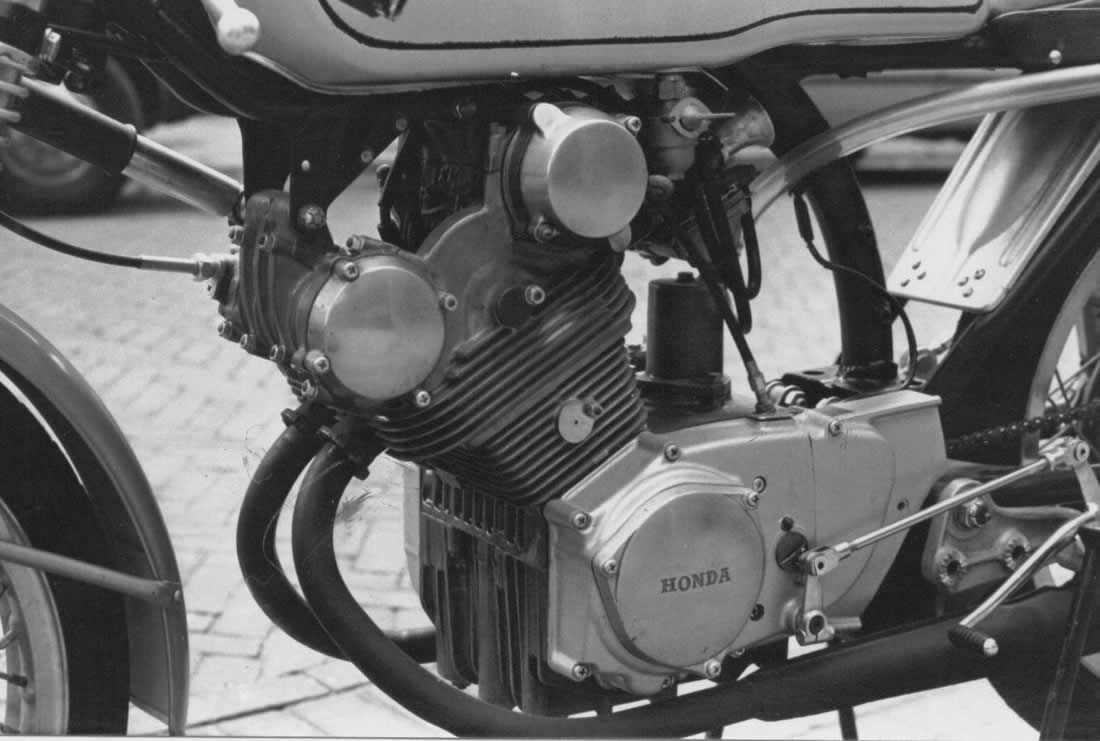
These CR-93's were known to be fast, reliable, and easy to maintain. Many a young racer started his career on one of these. Though Honda only claimed 16.5 HP @ 11,500 RPM, it was apparent that these bikes made considerably more than that. Some tuners got as much as 22 HP out of them! Pretty heady stuff for an over-the-counter 125cc production racer at the time. These little jewels would go over 110 MPH!
Moving on to 1963, you will have to remember that Honda had been expending relatively *HUGE* amounts of yen racing the previous 4 years, and they decided to take a step back... So in '63 the 1962 bikes are given to the riders and they are left to fend for themselves. Suzuki shows up with their new two-stroke 125, and run away with the championship winning 9 out of 12 races. Honda's do finish 2nd and 3rd, though.
Honda did have one, single interesting entrant in the 1963 Japanese GP, however. It was a *FOUR-CYLINDER* 125!!!
And it was designated RC-146... I don't have a picture of it, though.But that brings us to 1964, and the 2RC-146:
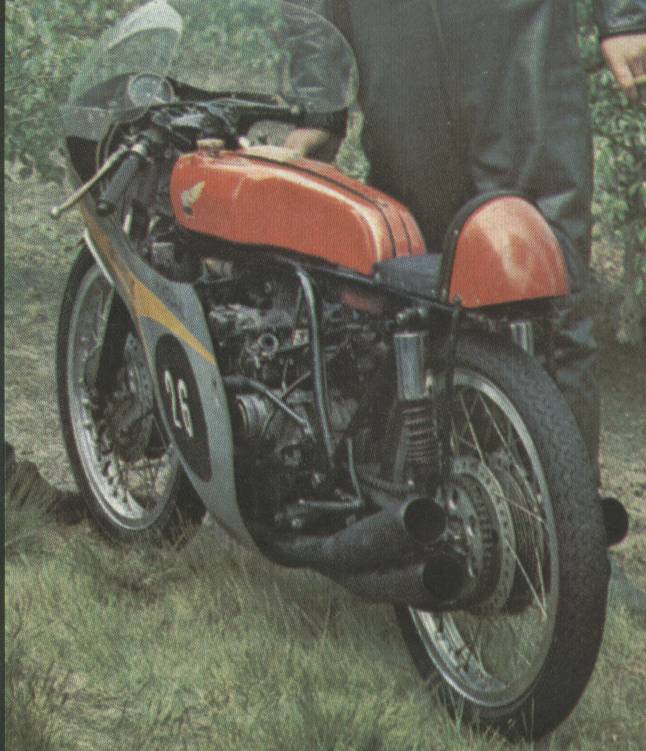
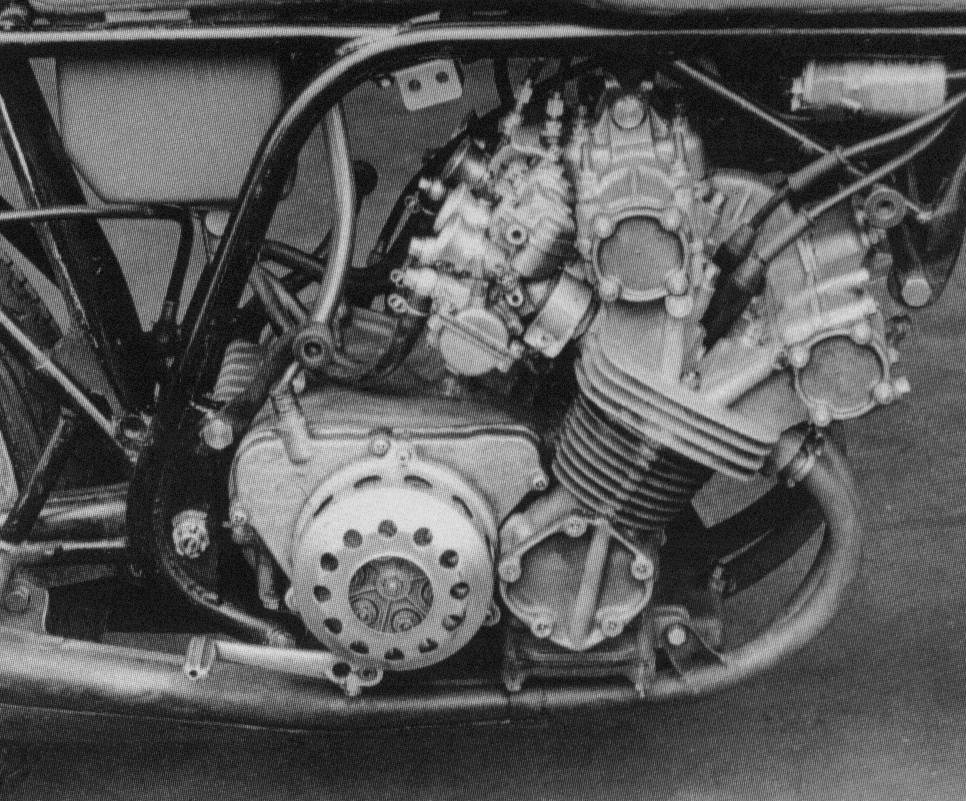
The engine is smaller version of Honda's 250cc four, and it has gear-driven camshafts, four-valves per cylinder, and a bore & stroke of 35.26 x 32mm giving a displacement of 124.99cc. Power is said to be 28 HP @ 16,500 RPM with redline at 18,000. Short bursts up to 19,000 are useable. This engine had an eight-speed gear cluster to help keep it in its narrow powerband.
Honda wins 7 of 11 races against Yamaha and Suzuki, and wins both the rider's and manufacturer's titles handily.
1965 was a disaster for Honda... They started the year with 1964's 2RC-146, but the bikes start breaking. They show up with an improved version at the Isle of Man - the 4RC-146:
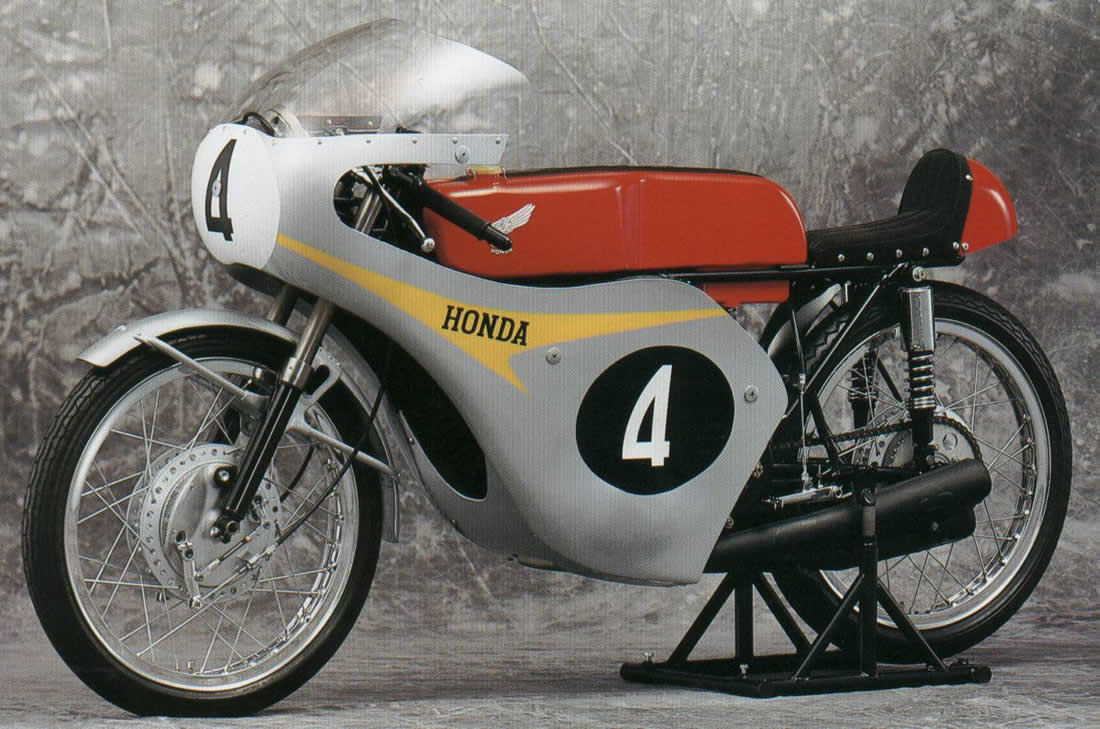
Not much different (said to only have different exhausts), and not much success with it either. Honda claimed more power - 30 HP @ 17,000 - but the bike doesn't run like it... Best finish it has is a second, and Honda gets royally trouched in the world championship.
However, there is a ray of hope at the final GP of the year... When Honda debuts a 125cc *FIVE* cylinder! It leads, but retires with mechanical problems... It is designated the RC-148:
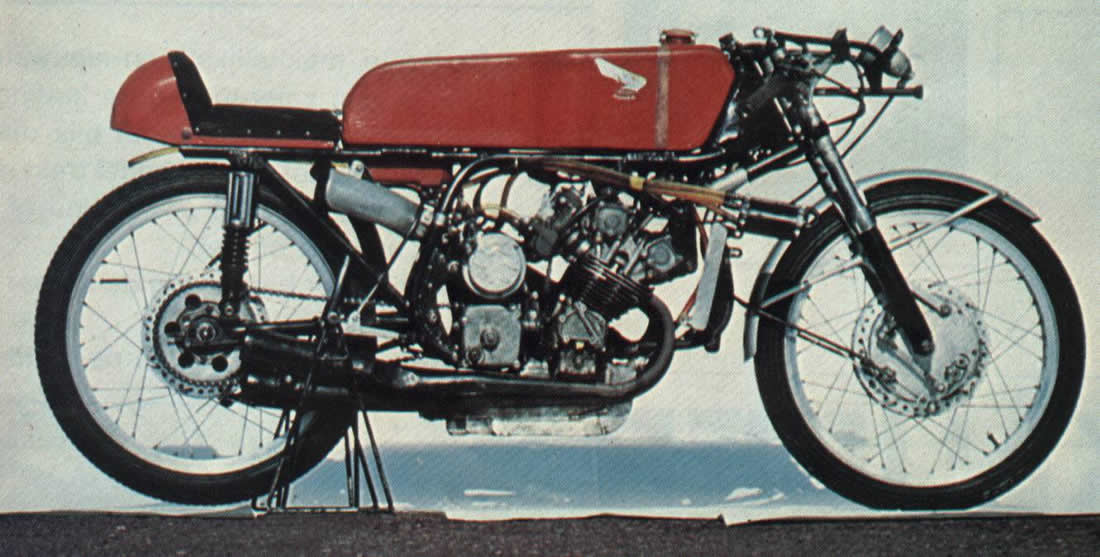
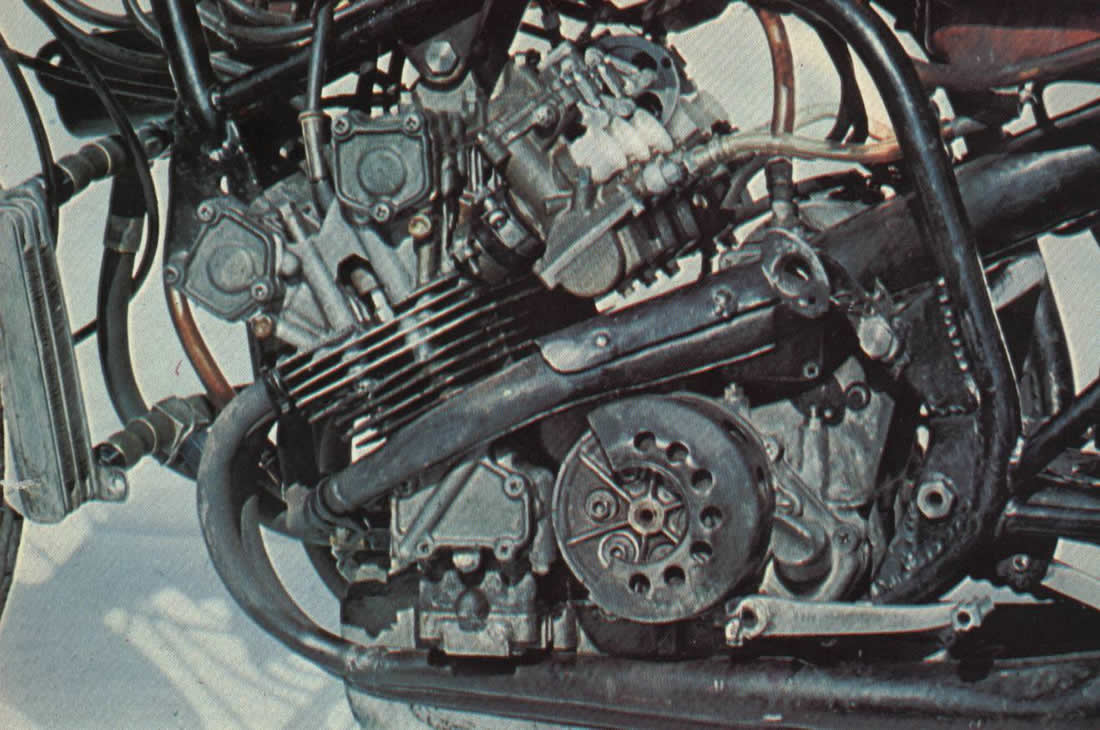
Essentially this engine was two-and-a-half RC-115 50cc twins... Bore & stroke was 33 x 29mm for a capcity of 124cc, DOHC with four valves per cylinder, and the cam drive by gears in between the third and fourth cylinders (left to right, if you were sitting on the bike). It has an eight-speed gearbox, is wet-sumped, and makes 34 HP @ 20,000 RPM!
Which brings us to 1966...
And the incredible 125 RC-149:
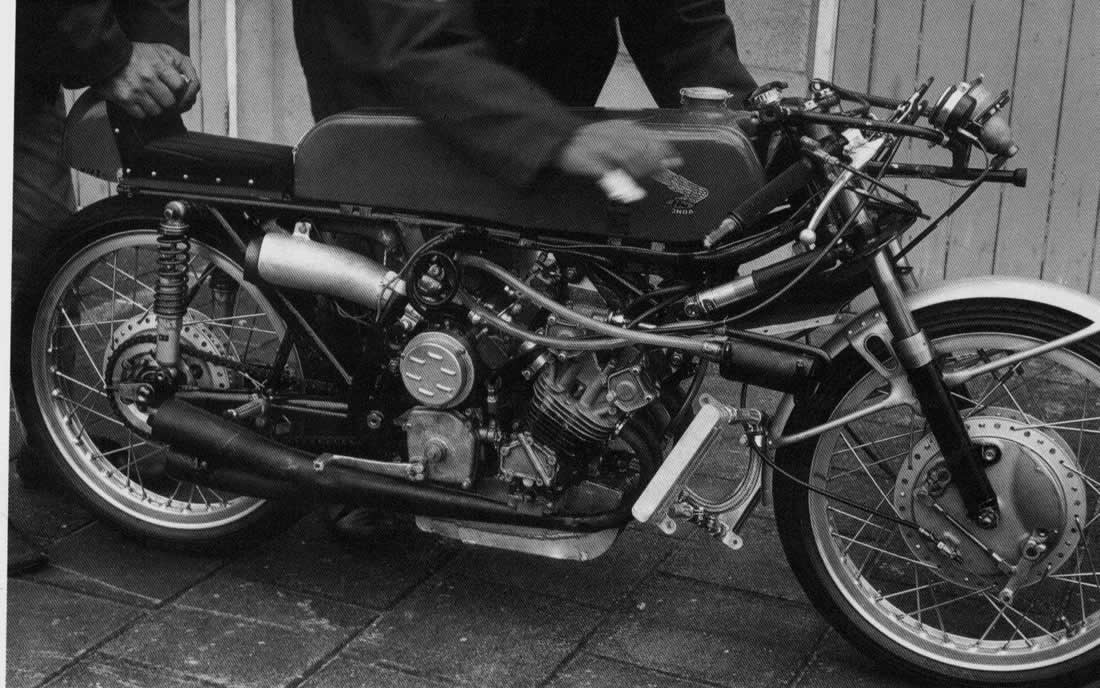
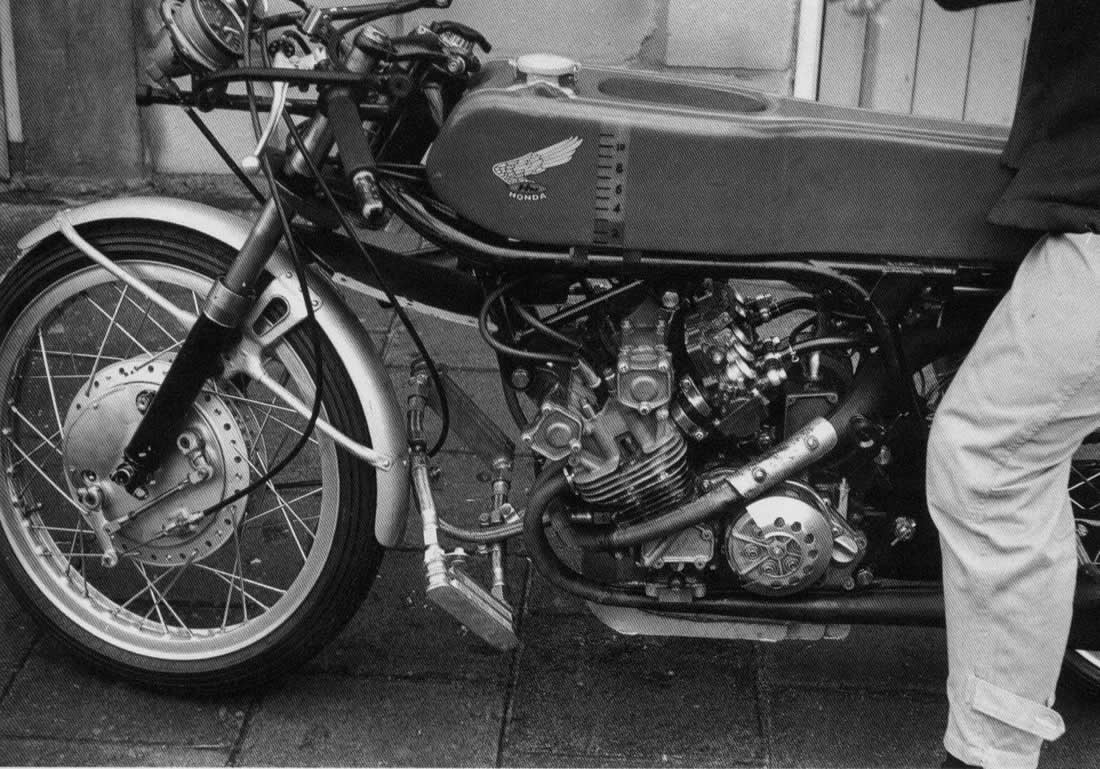
This was most definitely the pinnacle of Honda's 125 development, and in particular it shows Honda's first attempts at playing with crank layout and firing orders to influence power delivery...
You see, the crankshaft ont the RC-149 was really unique. The left three cylinders had a crank layout with 120-degree spaced throws (just like many three-cylinder engines), but the right two cylinders has their crank throws at 180-degrees!!! Honda was never very forthcoming as to why they did this, but when I asked Irimajiri about it all he did was smile and say "Power delivery and breathing." That was all he would say on the subject, period.

Power was given as 38 HP @ 20,500 RPM, but the engines were known to have turned as much as 24,000, though they didn't make more power up there. The large amount of available over-rev capability was to allow Honda's riders to stay in a lower gear if necessary between corners, and minimize shifting... After all, they were racing against bloody two-strokes!

Yamaha put Phil Read and Bill Ivy up against Honda in 1966, but it didn't matter. Luigi Taveri won the title for Honda - both the manufacturer's and rider's.
This was to be the last time a four-stroke won the 125cc World Championship.
Honda withdrew from the 50cc and 125cc championships in 1967 to concentrate on the 250, 350, and 500 titles. Never again would the 125 class hear the wailing howl of the Honda Fives, and the 125cc class would forever be heard as the yowling sqeaul of two-cycles...
Sad...
Hope you enjoyed the info and the pics!
Cheers!
Dallara

